
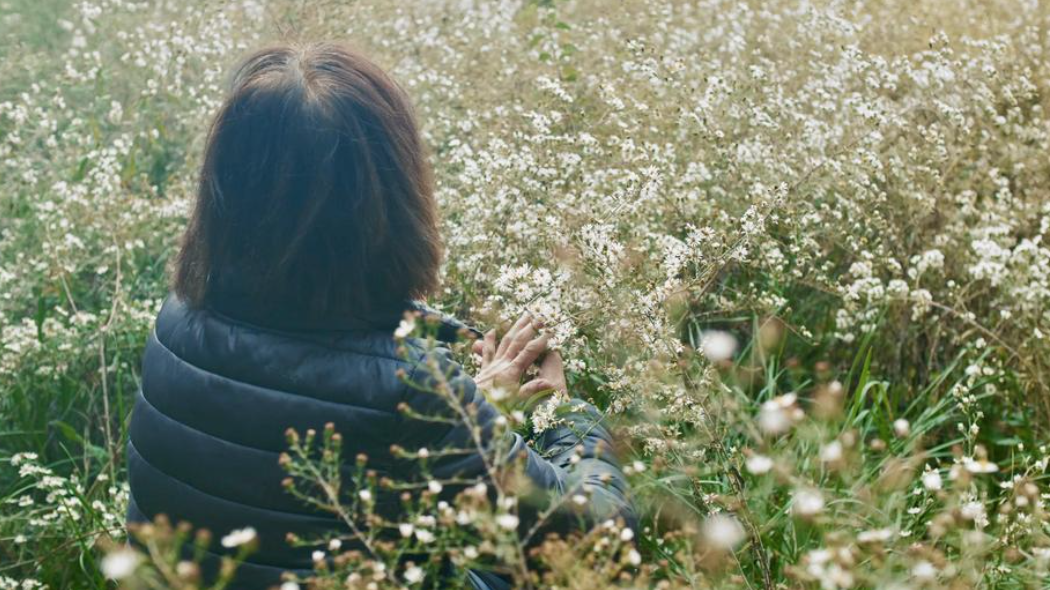
There is deep wisdom within our very flesh, if we can only come to our senses and feel it. -Elizabeth A Behnke
Movement is a direct language of our existence – a language of perception, intuition and inner knowing.
1. INTRODUCTION – THE ORIGINS
Sensory Movement is a body-centred practice developed at the intersection of Oriental medicine, somatic practice, and contemporary dance. Through working closely with clients’ symptoms as an acupuncturist and somatic practitioner, engaging deeply with my own body as a dancer, and practicing in close relationship with nature, I witness how our being expresses itself through sensory and energetic relationships.
My understanding of movement began in early childhood. Around the age of seven, when I struggled with language and writing, I often remained silent, feeling comfortable without the need to speak. I spent much of my time with my grandmother, walking in the forest and playing with stones, trees, and soil for hours.
One day, while moving and dancing spontaneously with my eyes closed, I became aware of a powerful energy flowing through my body. I could feel every motion, each one alive with sensation, as my body followed continuous currents—movement arising not only from me, but shaped by the moment itself. It felt deeply intimate. There was no separation between my body and the space.
When I opened my eyes again, each motion seemed to emerge from the surrounding presence, as if it were speaking to me—a word from the rocks, a whisper from the wind, a long story from the old trees. My body kept shaping this dialogue between itself and the surroundings, and the movement within me felt inseparable from the world beyond—as if my body extended into the the mountains, the sky, and the wider universe.
This dance was both my own language and the language of the space around me—boundless and universal. In that moment, I felt completely free and secure.
This early experience of “energy dance,” and becoming a witness to the moment, naturally led me into contemporary dance and choreography, and later toward somatic practices and Traditional Chinese Medicine.
In dance, I explored the performing body as a living medium—expressing emotion, shaping ideas, and giving form to imagination. Somatic practices turned my attention inward, deepening my listening to inner movement and bodily awareness. Traditional Chinese Medicine opened a path of healing through energetic balance, reconnecting me with an ancestral lineage, as well as allowing me to work closely with clients’ intimate energetic landscapes.
Through my practices, I came to recognize the inseparable relationship between body and spirit, and between body and nature.
In contemporary life, we are often disconnected from ourselves and from the natural world. We feel constant pressure to be productive and recognized externally, leaving little time to simply sit in silence and be with ourselves. Our goal-oriented mindset moves through repeated cycles of stress, shaped by cultural conditioning and educational systems, gradually distancing us from our true nature.
Yet, in moments of genuine contact—when we are deeply touched, or when we encounter nature and feel held by something greater—something within us begins to remember. We recognize ourselves again. A sense of openness and lightness arises, a quiet return to who we are. We remember that we come from nature, that we are connected to something larger, and that this connection is the essence of who we are.
Since 2012, part of my work has intentionally taken place in natural environments through ritual performances and retreats. In nature, I return to a preverbal state—where movement arises before language, and the body becomes an open field of perception.
From these experiences, Sensory Movement has gradually unfolded as an ongoing practice—a way to explore, remember, and reconnect with our origin and our sense of home.

____________________________________________________________________________
2. BODY, SPACE, PERCEPTION
Sensory Movement explores how feeling, seeing, listening, and moving reconnect us with the living intelligence of the body, where sense is central—not only as physical perception, but as the capacity to make meaning, find direction, and navigate our inner and outer worlds.
Within this practice, body, space, and sensory perception are inseparable. Through embodied awareness, sensory experience opens into insight and inspiration, allowing creative and healing forces to emerge. The body is experienced as a living field of energy, responsive to both inner and outer influences, where movement arises as energy in motion through space.
Body and space are not separate, but form a continuous, permeable field in constant exchange, where perception, movement, and presence intertwine.
At its core, Sensory Movement is a return to the natural body and to pure sensory perception, through which the body reveals itself as a dynamic energy center—breathing, sensing, and continuously relating with its environment. In this process, the boundary between body and world dissolves, revealing our sensory-energy body as part of nature itself—an ongoing dialogue of perception, movement, and transformation.
By relearning how to feel, touch, see, hear, and move—and how to be moved by energy—we rediscover our sense of self, clarify perception, and recover our co-creative relationship with environment.
3. EMBODIED DYNAMICS : YIN-YANG AND ELEMENTAL WISDOM
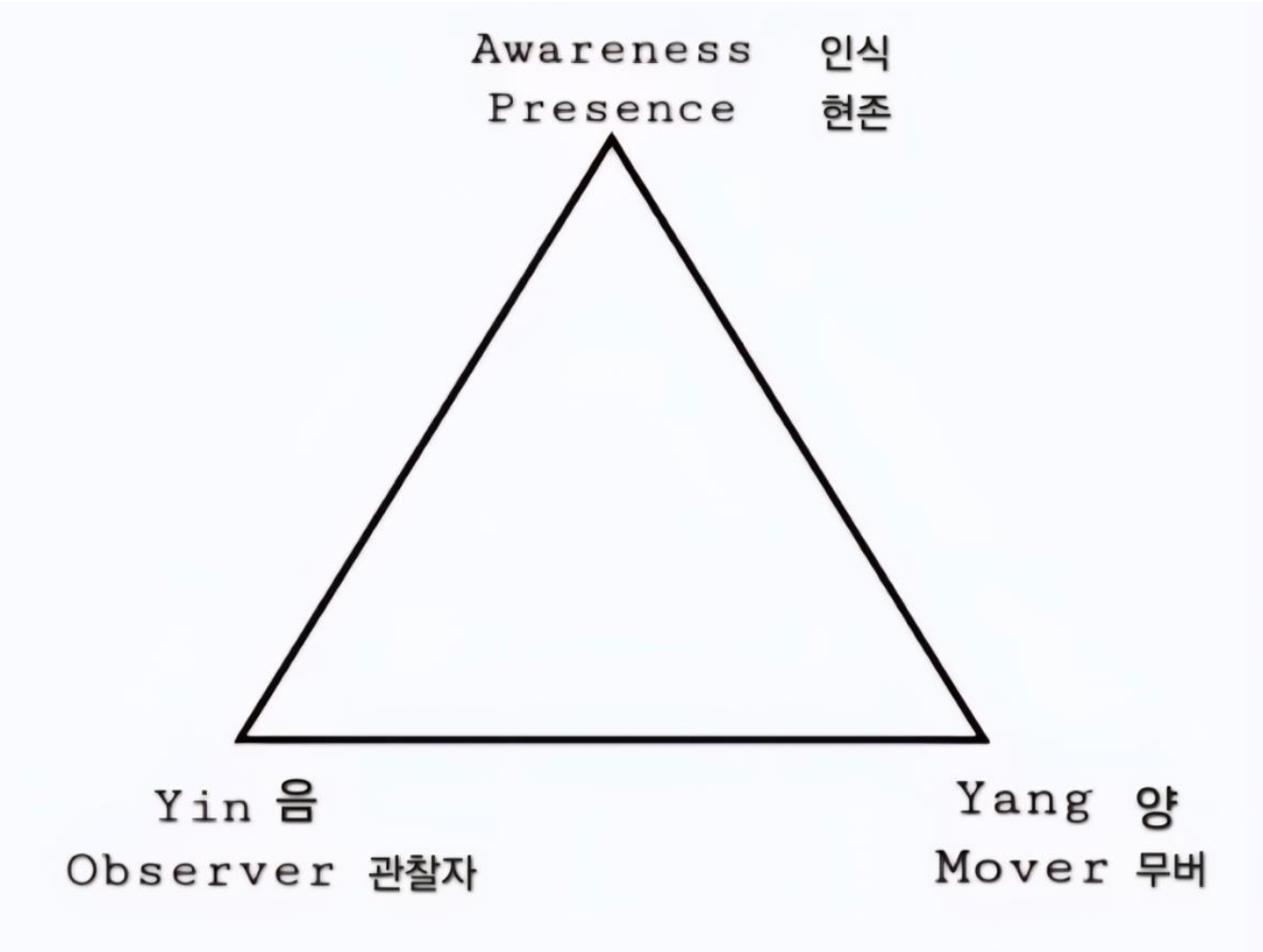
This practice explores the dynamic interplay of Yin and Yang through the shifting roles of mover and observer. Rooted in the wisdom of the Five Elements, it reflects the continuous transformation and interconnection of energy. Through direct, embodied experience, we engage in the natural phases of healing and creation—allowing these processes to unfold organically within the body.
Earth Phase – Grounding, Sensory Awareness, and Gravity
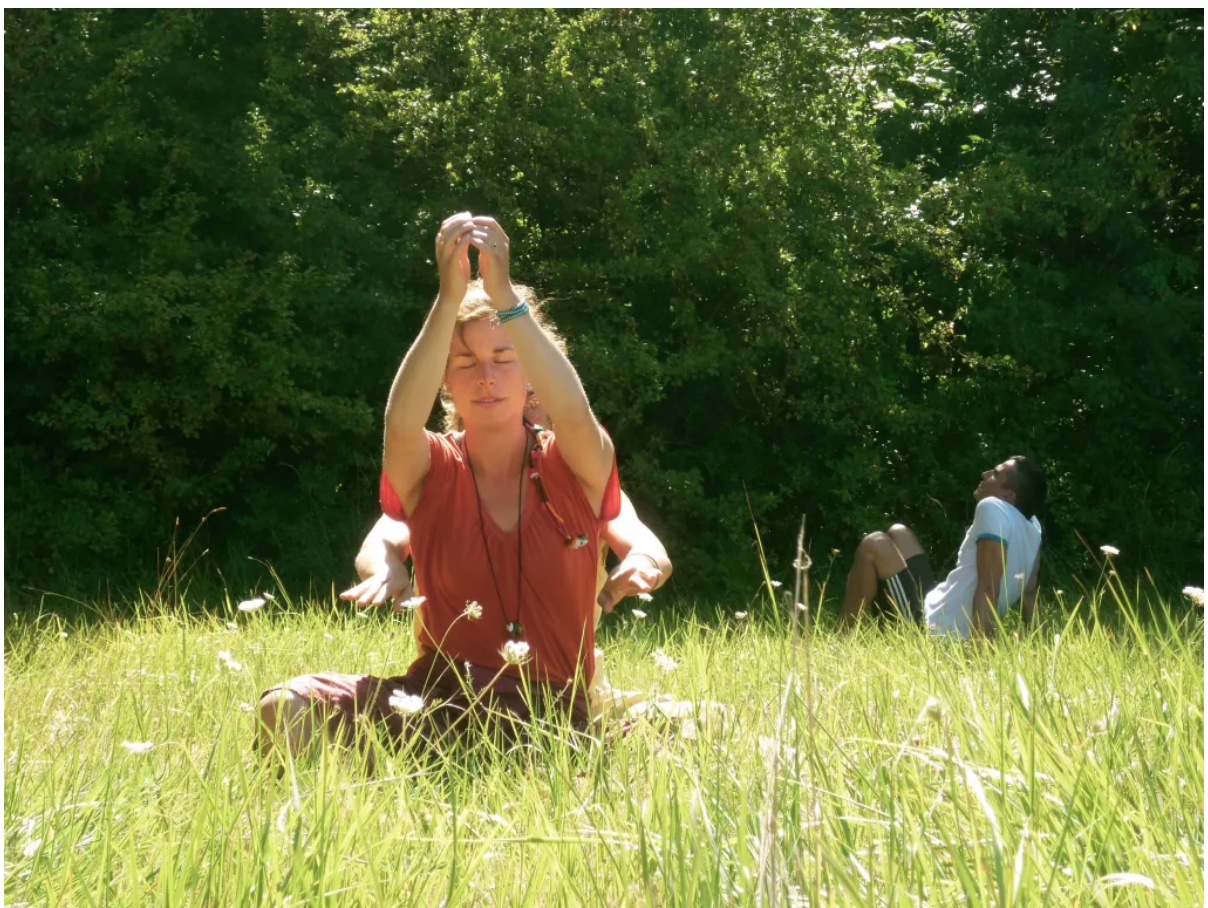
We begin by reconnecting with the senses and landing in the body with eyes closed. Vision softens, and the senses of feeling and listening come forward. In this phase, we focus on establishing a stable center, reconnecting with bodily boundaries, and sense of safety.
Through practices of yielding and working with gravity, the body learns to relax into support, sensing weight, alignment, and balance. This stage reflects the Earth wisdom of grounding, stability, and a secure foundation for presence and further exploration.
Water Phase – Relational Movement and Flow
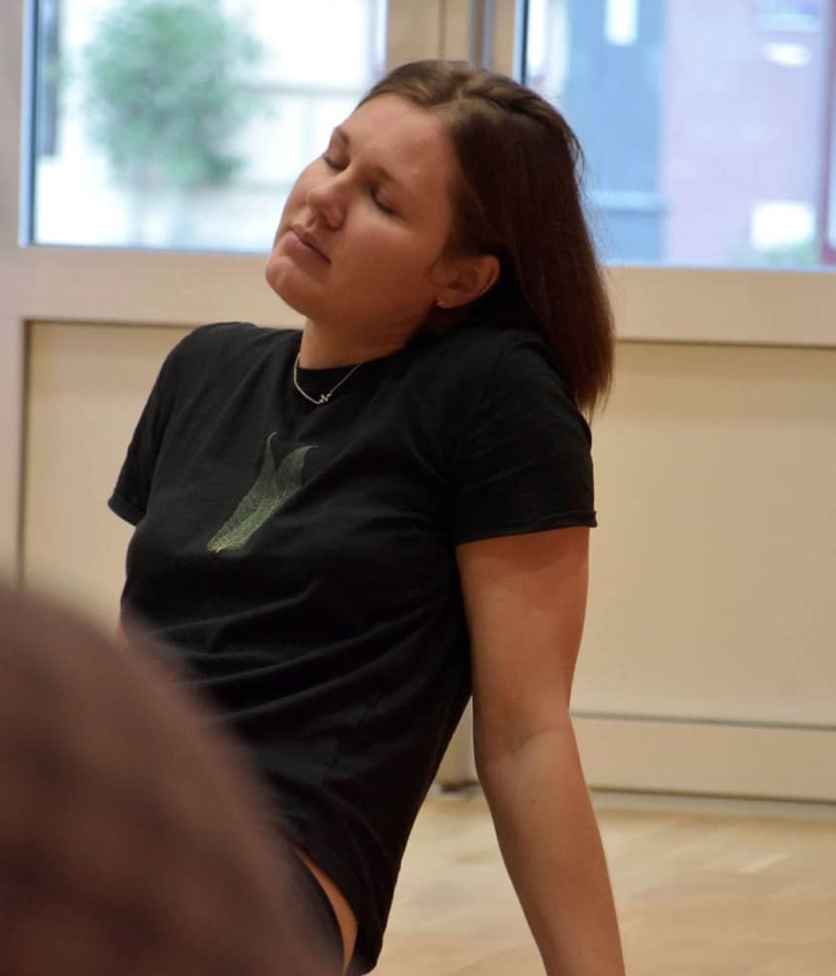
From this foundation, we explore Yin–Yang dynamics in movement with others. Through partner practice, one person moves while the other observes with open attention. Moving and being moved develops adaptability, responsiveness, and fluid connection. The body responds to sensation and energy, allowing emotions and feelings to flow through movement. This phase reflects the Water wisdom of fluidity, connection, and relational exchange.
Pairs of sensory experience guide this exploration:
Feeling — being felt
Seeing — being seen
Hearing — being heard
Moving — being moved
Through touch, texture, observation, and deep listening, we open to both perceiving and being perceived—experiencing and being experienced. By allowing ourselves to be seen, touched, and moved within a shared presence, our awareness naturally expands.
Perception deepens—until we begin to see through touch and feel through seeing.

Fire Phase – Reflection, Creative Expression & Embodied Language
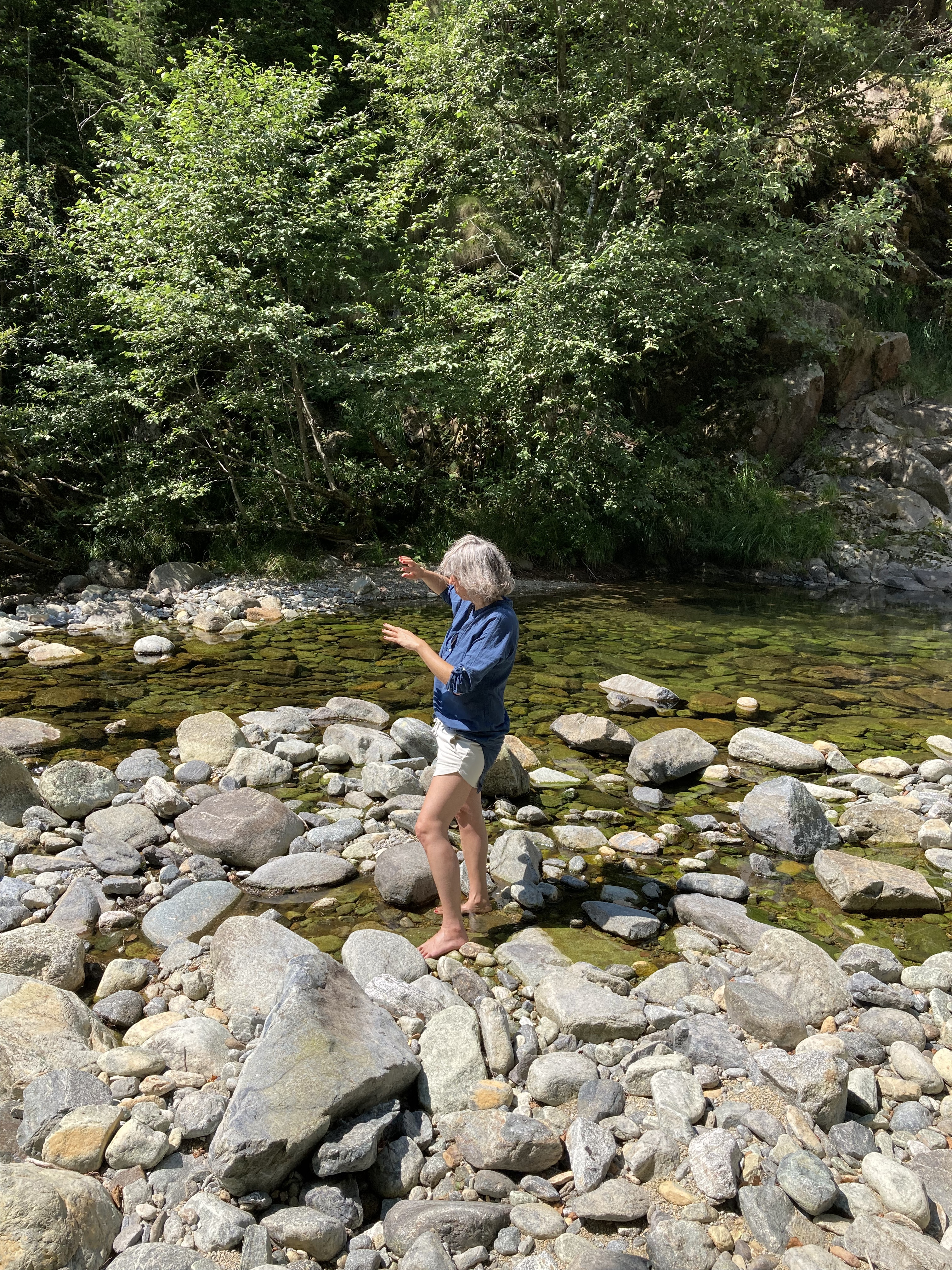
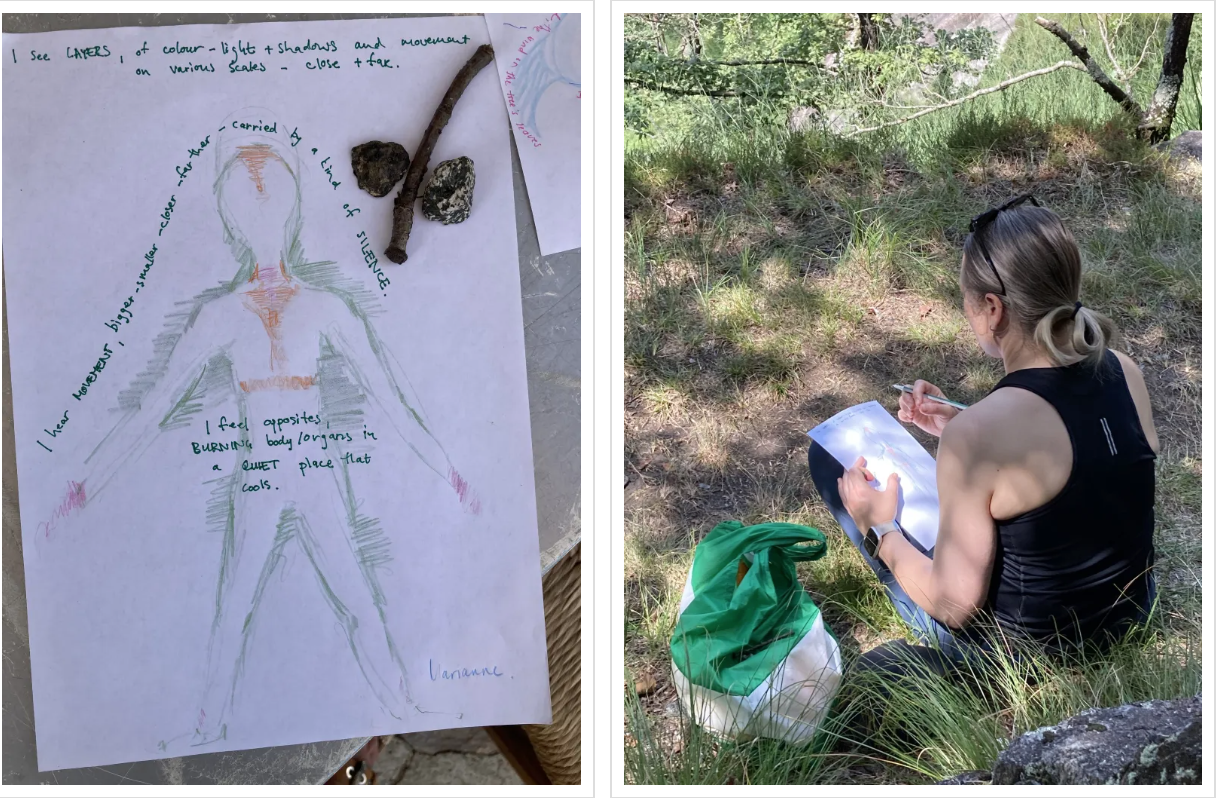
In this phase, we translate our sensory and energetic experiences into expression—through words, drawing, writing, and movement. This creative process supports integration and transformation, allowing insight and meaning to naturally emerge from what has been felt and lived.
Through reflection, we give voice to our inner landscape, deepen awareness, and connect our personal experience with others. This stage invites us to shape and share our experience, bringing it into form.
At times, this expression extends into site-specific performances, where words and movement are offered to the environment—honoring the relationship between body, place, and community.
_________________________________________________________________________
4. HEALING AND CREATION AS ONE PROCESS
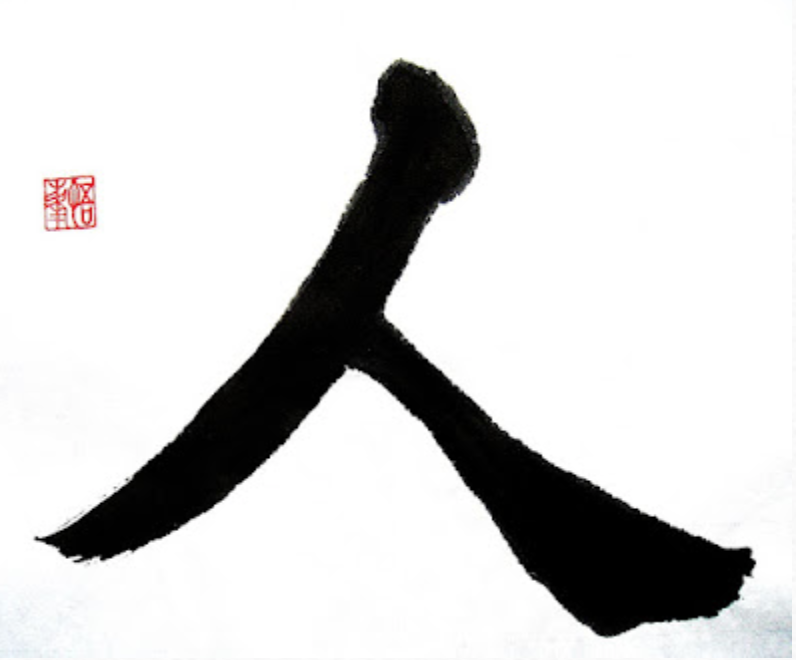
In Chinese writing, the character for human — 人 (rén) — is formed by two lines leaning toward each other. Rather than standing alone, the lines meet and support one another.
This reflects the essence of Sensory Movement: our being is never isolated but always in relationship—with our body, with others, and with the living environment. Just as mover and observer create a shared field of awareness, and body and space are held together, these two strokes suggest a dynamic balance of support, listening, and connection.
Through this practice, healing and creation are inseparable. Movement is not something we do alone—it happens between us, within us, and through the living world, allowing us to remember our origin, our connection to nature, and our larger selves.
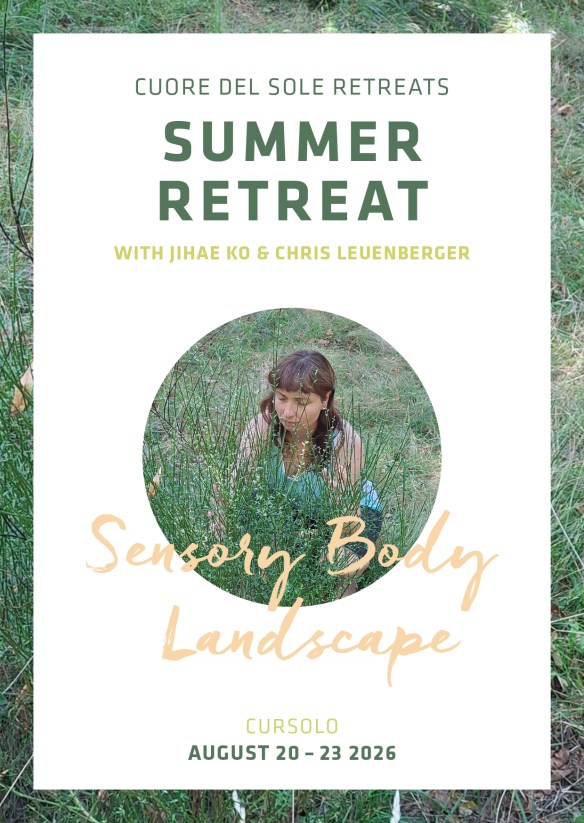
UPCOMING NATURE RETREAT
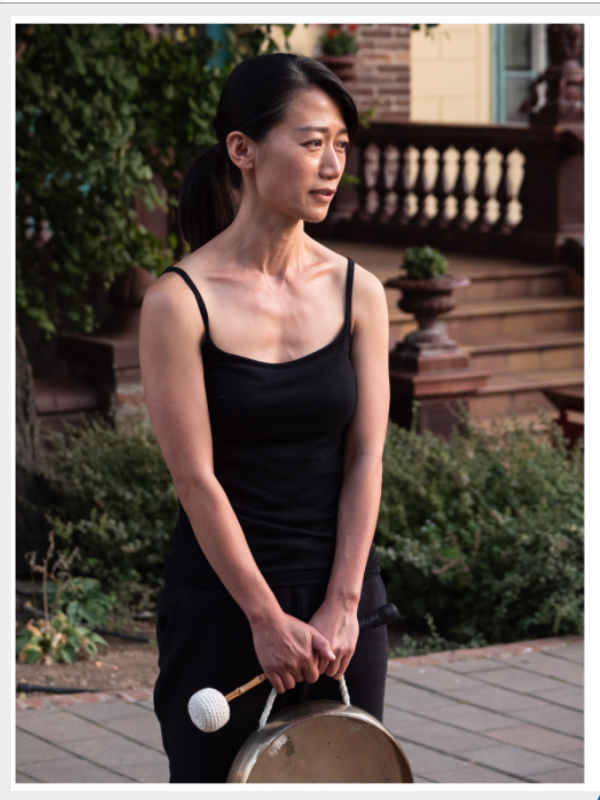
Ko Jihae is a dance artist, licensed acupuncturist, and somatic therapist based in Amsterdam. She integrates Traditional Oriental medicine, somatic healing, and artistic practice to help clients cultivate their own wisdom and capacity for self-healing.
Born into a family of Traditional Korean Medicine practitioners, Ko bridges ancestral healing traditions with contemporary approaches. Alongside her therapeutic work, she continues her artistic practice, exploring elemental wisdom through nature retreats and site-specific ritual performances.
Ko is a co-owner of Medicine Body Studio, where she facilitates ongoing sessions, researches and workshops.
 J. Ko 고지혜